If you are planning a career as a Deck Officer in the Merchant Navy, you may already be wondering where to begin. The career offers the opportunity to navigate international waters, work onboard merchant ships and progress through ranks from Deck Cadet to 3rd Officer, 2nd Officer, Chief Officer and eventually Master or Captain.
However, knowing the destination is only the beginning. You also need to understand the exact route, eligibility requirements, training, sponsorship process, sea time and Certificate of Competency (COC) examinations involved.
For most Indian students who have completed 12th standard with Physics, Chemistry and Mathematics (PCM), the DNS (Diploma in Nautical Science) route is one of the most direct ways to begin this journey.
This guide explains how to become a Deck Officer in India in 2026, including DNS eligibility, IMU CET, sponsorship, pre-sea training, shipboard training, Second Mate COC, salary, career progression and alternative routes.
What Does a Deck Officer Do?
Before choosing this career, it is important to understand what a Deck Officer actually does onboard a merchant ship.
A Deck Officer is involved in navigation, ship stability, seamanship, meteorology, marine communication, cargo operations, maritime law and safety procedures. These responsibilities are essential for the safe and efficient operation of a vessel.
Some of the key responsibilities include:
- Bridge watchkeeping: Monitoring the vessel during watchkeeping duties and using equipment such as radar, ECDIS and weather systems.
- Cargo operations: Assisting with the planning, loading and discharge of cargo at ports.
- Safety management: Conducting and supervising fire, lifesaving and emergency drills.
- Maintenance and inspections: Checking deck machinery, mooring equipment and safety appliances.
- Documentation: Maintaining logbooks, cargo documentation and port-related paperwork.
Deck Officer Career Progression
The typical career progression is:
Deck Cadet → 3rd Officer → 2nd Officer → Chief Officer → Master/Captain
Each stage requires the required sea service, training and Certificate of Competency examinations. Therefore, reaching the rank of Captain is a long-term career goal that can take approximately 12–15 years.
The advantage, however, is that qualified officers can progress through internationally recognised maritime ranks while gaining valuable experience at sea.
Why Choose the DNS Route to Become a Deck Officer?
For students looking for a relatively direct route into the Merchant Navy after 12th standard, DNS is a popular option.
The Diploma in Nautical Science (DNS) combines academic learning with practical maritime training and subsequent shipboard experience. As a result, students can move from classroom-based training to actual vessel operations within a structured career pathway.
Here are some of the major advantages of the DNS route.
Faster Route to Sea
The DNS pathway consists of 12 months of pre-sea training followed by 18 months of Structured Shipboard Training as a Deck Cadet.
Consequently, the overall training period is approximately 30 months before becoming eligible for the Second Mate examination.
Sponsorship Before Joining
One important feature of the DNS route is the sponsorship requirement.
Students need to obtain sponsorship from a shipping company before joining the DNS course. This provides a structured pathway towards onboard training after completing the institute-based phase.
Therefore, students should treat sponsorship as an important part of the admission process rather than considering it separately after completing their studies.
IMU and DG Shipping Recognition
The DNS programme is affiliated with the Indian Maritime University (IMU) and approved by the Directorate General of Shipping (DG Shipping).
These recognitions are important when selecting a maritime training route in India. Students should always check the current approval and eligibility requirements before taking admission.
Step 1 — Check Your DNS Eligibility
The first step in understanding how to become a Deck Officer in India is checking whether you meet the DNS eligibility criteria.
Academic Requirements
For the DNS route described in this guide, candidates should have:
- Completed 12th standard in the Science stream.
- Physics, Chemistry and Mathematics (PCM) as required subjects.
- Minimum 60% aggregate in PCM.
- Minimum 50% marks in English in 10th or 12th standard.
- Overall minimum 60% aggregate.
- Students appearing for 12th may apply for upcoming batches, subject to applicable requirements.
Age Criteria
Candidates should generally meet the following age requirements:
- Minimum age: 17 years
- Maximum age: 25 years
- SC/ST candidates: 5-year age relaxation
Because admission requirements can change, applicants should verify the applicable criteria for their intended batch.
Medical Requirements
Medical fitness is another essential part of the process.
Candidates must:
- Meet the applicable DG Shipping medical standards.
- Have 6/6 vision as required for the Deck Officer route.
- Have no colour blindness.
- Obtain the required medical certificate from a DG Shipping-approved doctor.
Medical fitness should be checked early in the admission process. That way, students can avoid investing significant time and money before confirming their eligibility.
IMU CET Requirement
The IMU CET (Indian Maritime University Common Entrance Test) is an important requirement for the DNS route.
The examination covers areas such as:
- Mathematics
- Physics
- Chemistry
- English
- General Knowledge
- Reasoning
A valid IMU CET qualification is required for the DNS admission pathway described here.
What If You Have 50–59% in PCM?
Students who do not meet the standard 60% PCM requirement for DNS may consider alternative routes.
For example, the ADNS (Advanced Diploma in Nautical Science) offered through Training Ship Varren is presented as an alternative route for candidates with 50% in PCM and without the IMU CET requirement. It follows a UK MCA-approved pathway towards a Deck Officer career.
Therefore, students should not assume that lower PCM marks automatically mean the end of their maritime career. Instead, they should compare the available routes and their respective eligibility requirements.
Step 2 — Clear IMU CET and Obtain DNS Sponsorship
After confirming your eligibility, the next stage is to work on IMU CET and DNS sponsorship.
It is important to understand that these are two separate processes.
IMU CET
Your IMU CET performance determines your eligibility and ranking for DNS admission.
However, qualifying in IMU CET alone does not automatically provide a sponsorship or guarantee an onboard training berth.
DNS Sponsorship
DNS sponsorship involves selection by a shipping company. The sponsoring company may provide or support the training pathway and, importantly, provide the structured onboard training opportunity after the pre-sea phase.
The sponsorship selection process typically includes:
- Written test covering areas such as Mathematics, Physics, English, General Knowledge and Aptitude.
- Psychometric assessment.
- Personal interview.
- Medical examination.
Several shipping companies regularly sponsor DNS cadets, including Anglo-Eastern, Bernhard Schulte Shipmanagement (BSM), Synergy Group, Fleet Management, V. Ships, Great Eastern Shipping and Shipping Corporation of India (SCI).
Sponsorship Support at Training Ship Varren
At Training Ship Varren, students receive assistance throughout the DNS sponsorship process. This includes guidance related to applications, written test preparation, interviews and documentation, along with connections with RPSL-approved companies.
The February 2027 batch is currently open with 40 seats available.
Step 3 — Complete 12 Months of Pre-Sea DNS Training
Once you have obtained sponsorship and confirmed your admission, the next stage is residential pre-sea training.
The institute-based phase lasts 12 months and focuses on building the technical knowledge and practical skills required before joining a merchant vessel.
What Do You Learn During DNS Training?
The DNS curriculum covers several areas that are directly relevant to Deck Officers, including:
- Navigation
- Ship stability
- Seamanship
- Meteorology
- Marine communication
- Cargo handling
- Maritime law
- Security and safety procedures
At Training Ship Varren’s DG Shipping-approved campus at Khardi, Thane, the programme combines classroom learning with practical and simulator-based training.
Classroom Training
Students study subjects such as navigation, meteorology, ship stability and maritime law.
Simulator Training
Bridge simulators help students understand navigation situations in a controlled training environment. Training also includes exposure to equipment such as ECDIS and radar.
Practical Training
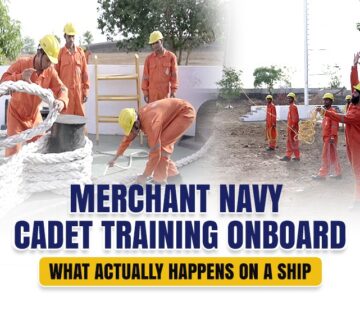
Cadets participate in practical activities involving fire drills, lifeboat operations, rope work and cargo-handling equipment.
STCW Safety Training
The programme also includes STCW Safety Courses, including Basic Safety Training required before joining a vessel.
Online Entrance Test
The training programme includes a 2-hour MCQ examination covering English, Reasoning, Personality, Mathematics, General Knowledge, Physics and Chemistry.
Furthermore, the 12-month phase covers Semester 1 and Semester 2 of the IMU programme. Cadets also begin the IMU Distance Learning Programme (DLP), which continues during the sea-time phase.
Step 4 — Complete 18 Months of Structured Shipboard Training
After completing the pre-sea training, you move from the classroom to the vessel.
At this stage, you join your sponsoring company’s vessel as a Deck Cadet (TNOC — Trainee Nautical Officer Cadet).
This phase is particularly important because it gives you direct exposure to shipboard operations and the responsibilities of a Deck Officer.
What Does a Deck Cadet Do Onboard?
During Structured Shipboard Training, cadets participate in activities such as:
- Standing bridge watches alongside senior officers.
- Assisting with cargo operations at ports.
- Maintaining the Training Record Book (TRB).
- Completing assigned practical training tasks.
- Continuing Semesters 3, 4 and 5 of the IMU Distance Learning Programme.
The 18-month shipboard period therefore complements the theoretical knowledge gained during pre-sea training.
According to the information provided for this programme, cadets receive a stipend of approximately $400–$600 per month during the structured shipboard training period.
Total DNS Training Duration
The two major stages are:
12 months pre-sea training + 18 months shipboard training = 30 months
After completing this structured training, candidates can move towards the examination stage required for officer certification.
Step 5 — Clear the Second Mate Certificate of Competency Exam
Completing the DNS programme and required shipboard training is not the final step.
You must also clear the Second Mate Certificate of Competency (COC) examination conducted by DG Shipping.
This examination assesses the knowledge and competence required for officer-level responsibilities onboard merchant ships.
The examination covers areas such as:
- Navigation and Chart Work
- Ship Stability and Cargo Operations
- Meteorology and Oceanography
- Marine Law and Ship Management
- GMDSS and Communications
- Ship Safety and Environmental Protection
What Happens After Clearing the Second Mate COC?
Once you complete the required training, examinations and applicable STCW requirements, you can obtain the Second Mate (Foreign Going) Certificate of Competency through the applicable DG Shipping process.
This certification enables you to sail as a 3rd Officer/Third Mate on international merchant ships, subject to meeting the applicable requirements.
In other words, the Second Mate COC is a major milestone in your journey from Deck Cadet to Deck Officer.
Step 6 — Build Your Deck Officer Career
After obtaining the required certification and joining as a qualified officer, your career continues through progressive ranks.
The usual progression is:
3rd Officer → 2nd Officer → Chief Officer → Master/Captain
Each promotion involves additional sea service, training and examinations.
Deck Officer Salary in 2026
Salary varies depending on factors such as rank, vessel, employer, experience and contract.
The salary ranges provided in the source material are:
| Rank | Sea Time / Requirement | Monthly Salary |
|---|---|---|
| Deck Cadet (SSTP) | During 18-month training | $400–$600 stipend |
| 3rd Officer | After 2nd Mate COC | $3,500–$5,500 (~₹2.9L–₹4.5L) |
| 2nd Officer | After 1st Mate COC | $5,500–$8,500 (~₹4.5L–₹7L) |
| Chief Officer | Additional sea time + exam | $8,000–$12,000 (~₹6.6L–₹10L) |
| Master/Captain | Full COC + experience | $8,500–$15,000+ (~₹7L–₹12L+) |
These figures should be treated as indicative ranges rather than guaranteed salaries.
Tax Considerations for Seafarers
Another reason the Merchant Navy attracts candidates is the potential tax advantage available to qualifying seafarers.
The source information states that salaries can be tax-free for seafarers who qualify as Non-Resident Indians by spending 183 or more days outside India during a financial year.
However, tax residency depends on applicable rules and an individual’s circumstances. Therefore, candidates should obtain professional tax advice before making financial decisions based on tax benefits.
Additional Benefits
Apart from salary, shipping companies may provide benefits such as:
- Food onboard
- Accommodation
- Travel to and from the vessel
- Medical coverage onboard
As a result, the overall employment package can be more valuable than the basic salary figure alone.
Global Career Opportunities for Deck Officers
A career at sea can provide international exposure as well as professional experience across different types of merchant vessels.
The maritime industry supports a large proportion of international trade. Consequently, qualified seafarers can find opportunities with shipping companies operating vessels across international routes.
For DNS graduates, the career can therefore combine professional growth with the opportunity to work in an international environment.
DNS vs BSc Nautical Science vs ADNS
DNS is not the only route available to students interested in becoming Deck Officers.
Depending on your academic qualifications, career goals and preferred type of qualification, you may also consider BSc Nautical Science or ADNS.
| Factor | DNS | BSc Nautical Science | ADNS (HND-NS) |
|---|---|---|---|
| Duration | 1 year + 18 months sea | 3 years + 12 months sea | 2 years + sea time |
| PCM Marks Required | 60% minimum | 60% minimum | 50% minimum |
| IMU CET Required | Yes — mandatory | Yes — mandatory | No |
| Sponsorship Required | Yes — mandatory | Depends on institute | Recommended |
| Speed to Sea | Fastest | Slower | Fast |
| Recognition | India — IMU/DGS | India — IMU/DGS | International — UK MCA |
| Fees | ₹8.5 lakh (TSV) | ₹5–15 lakh | ₹6–12 lakh |
Which Route Should You Choose?
DNS can be suitable for students who want to enter shipboard training relatively quickly and follow a structured Deck Officer pathway.
On the other hand, BSc Nautical Science may suit students who prefer a full undergraduate degree and a longer academic programme.
Meanwhile, ADNS can be an alternative for candidates whose PCM marks fall between 50–59% or who are interested in the UK MCA route described above.
Therefore, there is no single route that is perfect for every student. Your academic marks, career objectives, eligibility and preferred qualification should all be considered before making a decision.
Why Choose Training Ship Varren for DNS?
Training Ship Varren provides a DNS programme designed to support students through different stages of the Deck Officer pathway, from sponsorship preparation to pre-sea training and subsequent career progression.
Key features include:
- DG Shipping approved — MTI No. 206087 and affiliated with Indian Maritime University.
- Dedicated DNS campus at Khardi, Thane, with residential facilities, simulators and practical training labs.
- Sponsorship support through partnerships with RPSL-approved shipping companies.
- End-to-end guidance covering application, written test preparation, selection and admission.
- Transparent and ethical process with no agents, no hidden charges and merit-based selection.
- February 2027 batch open with 40 seats available.
For students who are serious about a career at sea, choosing the right maritime training institute is an important decision. Always verify the applicable approvals, eligibility criteria, course structure and sponsorship terms before admission.
Frequently Asked Questions About Becoming a Deck Officer
Q1. What is the DNS course and how does it help you become a Deck Officer?
DNS, or Diploma in Nautical Science, is a 1-year residential pre-sea training programme affiliated with Indian Maritime University and approved by DG Shipping. After completing the institute-based phase, cadets undergo 18 months of Structured Shipboard Training. Following the required training and Second Mate COC examination, candidates can progress to officer-level sailing as a 3rd Officer, subject to applicable requirements.
Q2. What is the eligibility to become a Deck Officer through DNS in India?
Candidates should have completed 12th standard in the Science stream with the required PCM subjects and meet the prescribed marks criteria. The route also requires IMU CET qualification, applicable age limits, medical fitness, required eyesight standards and DNS sponsorship from an eligible shipping company.
Q3. How long does it take to become a Deck Officer in India through DNS?
The DNS training pathway described here consists of 12 months of pre-sea training and 18 months of Structured Shipboard Training, making a total of 30 months. After completing the required post-sea preparation and Second Mate COC examination process, candidates can progress towards sailing as a 3rd Officer.
Q4. What is the salary of a Deck Officer in India in 2026?
The salary ranges provided in this guide indicate approximately $3,500–$5,500 per month for 3rd Officers, $5,500–$8,500 for 2nd Officers and $8,500–$15,000+ for Masters/Captains. Actual compensation varies according to rank, company, vessel, experience and contract.
Q5. Is DNS sponsorship mandatory to become a Deck Officer?
For the DNS route described here, sponsorship is a mandatory part of the admission pathway. Candidates must obtain sponsorship through the applicable selection process, which may include a written test, psychometric assessment, interview and medical examination.
Q6. What is the DNS course fee at Training Ship Varren?
The source information states that the IMU DNS course fee at Training Ship Varren is ₹8,50,000, excluding IMU University fees. This covers the 12-month pre-sea training, while the 18-month Structured Shipboard Training is funded by the sponsoring shipping company. The February 2027 batch has 40 seats available.
Q7. Can I become a Deck Officer without DNS?
Yes. Alternative pathways include ADNS and BSc Nautical Science.
The ADNS route described in this guide is a UK MCA-approved pathway requiring 50% in PCM and no IMU CET. BSc Nautical Science is a 3-year degree option for students who prefer a full undergraduate qualification.
Q8. How can Training Ship Varren help me become a Deck Officer?
Training Ship Varren offers the IMU DNS course with DG Shipping approval, residential training at its Khardi campus, simulator-based practical training, sponsorship support and guidance through the admission and selection process.
Final Thoughts: How to Become a Deck Officer in India
If your goal is to become a Deck Officer in India, the DNS route provides a structured pathway from 12th standard to pre-sea training, shipboard experience and officer certification.
The journey can be summarised as:
12th PCM → IMU CET → DNS Sponsorship → 12 Months Pre-Sea Training → 18 Months Shipboard Training → Second Mate COC → 3rd Officer → 2nd Officer → Chief Officer → Master/Captain
However, choosing the right route requires more than simply looking at salary or the speed of reaching the sea. You should first confirm your academic eligibility, medical fitness, sponsorship requirements, financial considerations and long-term career objectives.
If you are ready to begin your journey towards becoming a Deck Officer in India, or if you need guidance on whether DNS or ADNS is more suitable for your qualifications, contact Training Ship Varren at 1800 268 2891 or submit an admission enquiry.
View the full IMU DNS Course details at Training Ship Varren.
You can also refer to the DG Shipping official portal for approved institute information and the Indian Maritime University website for IMU CET-related information.